
Archives
Bladder Augmentation Surgery in Patna
Restore Bladder Function. Protect Kidney Health. Improve Quality of Life.
Advanced Reconstructive Surgery for Small or Poorly Functioning Bladder
A bladder that cannot store urine properly can significantly affect a person’s quality of life, leading to frequent urination, urinary incontinence, recurrent infections, kidney damage, and long-term urinary complications. In certain conditions, bladder capacity becomes severely reduced, making reconstructive surgery necessary.
At NIRAMAYAH HOSPITAL, we offer Bladder Augmentation (Augmentation Cystoplasty), an advanced reconstructive urological procedure designed to increase bladder capacity, reduce bladder pressure, and protect kidney function. Our experienced urology team provides comprehensive evaluation, surgical expertise, and long-term follow-up care for both pediatric and adult patients.
What is Bladder Augmentation?
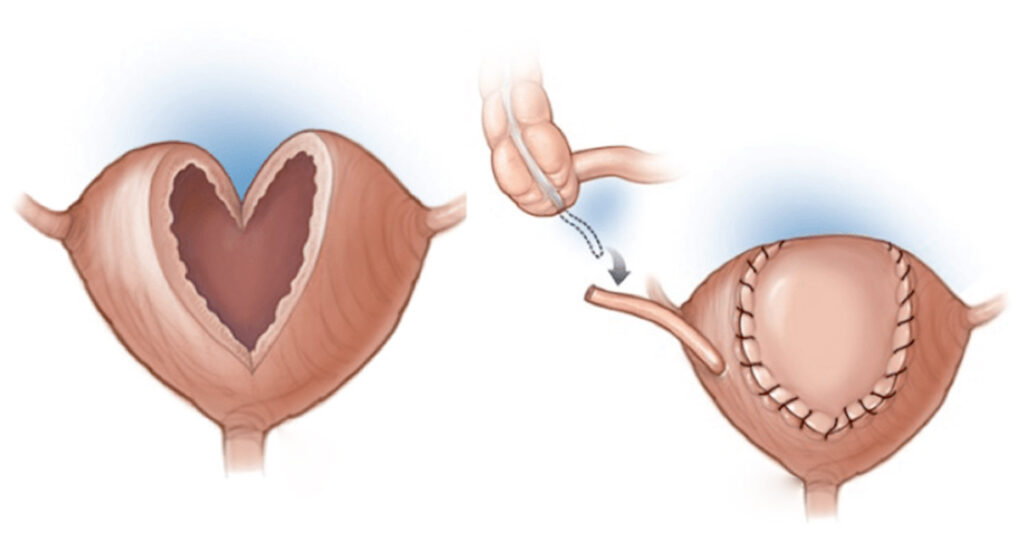
Bladder Augmentation, also known as Augmentation Cystoplasty, is a reconstructive surgical procedure used to enlarge the bladder and improve its ability to store urine.
In this procedure, a small segment of the intestine is surgically attached to the bladder, increasing its size and reducing internal pressure. This allows the bladder to hold more urine comfortably while protecting the kidneys from damage caused by high bladder pressure.
The procedure is commonly performed in patients whose bladder cannot function normally due to congenital abnormalities, neurological conditions, or severe bladder disease.
Why is Bladder Augmentation Needed?
A healthy bladder stores urine at low pressure and empties efficiently. Certain medical conditions can cause the bladder to become small, stiff, overactive, or unable to store urine safely.
When bladder pressure becomes too high, it can lead to:
- Urinary incontinence
- Frequent urination
- Recurrent urinary tract infections
- Kidney damage
- Hydronephrosis
- Poor quality of life
Bladder augmentation helps create a larger, low-pressure reservoir for urine storage.
Conditions That May Require Bladder Augmentation
The procedure may be recommended for patients with:
Neurogenic Bladder
Bladder dysfunction caused by neurological conditions such as:
- Spina bifida
- Spinal cord injury
- Multiple sclerosis
- Congenital neurological disorders
Congenital Bladder Abnormalities
- Bladder exstrophy
- Posterior urethral valve complications
- Congenital urinary tract defects
Severe Overactive Bladder
Patients who do not respond to medications or other treatments.
Tubercular or Contracted Bladder
Severe bladder shrinkage caused by infection or inflammation.
Radiation-Induced Bladder Damage
Bladder dysfunction resulting from pelvic radiation therapy.
Symptoms of Poor Bladder Function
Patients may experience:
- Frequent urination
- Urgency to urinate
- Urinary leakage
- Nighttime urination
- Recurrent urinary infections
- Difficulty emptying the bladder
- Kidney swelling
- Reduced bladder capacity
- Pelvic discomfort
A detailed evaluation helps determine whether bladder augmentation is appropriate.
Advanced Care Across Urology, Orthopaedics & Gynaecology In Patna
Whether you need surgery, require consultation for a gynaecological condition, a joint issue or a urological problem, Niramayah Hospital offers comprehensive, specialist-led care all under one roof in Patna.
Diagnostic Evaluation Before Surgery
Our specialists perform comprehensive assessments including:
Clinical Evaluation
- Detailed medical history
- Physical examination
Laboratory Tests
- Urine analysis
- Kidney function tests
- Blood investigations
Imaging Studies
- Ultrasound
- CT Scan
- MRI (when required)
Specialized Urological Tests
- Urodynamic studies
- Cystoscopy
- Renal function assessment
These investigations help assess bladder capacity, bladder pressure, and kidney health.
How is Bladder Augmentation Performed?
Step 1: General Anesthesia
The patient is placed under general anesthesia.
Step 2: Bladder Assessment
The bladder is surgically accessed and evaluated.
Step 3: Intestinal Segment Preparation
A small portion of the intestine is isolated and prepared.
Step 4: Bladder Enlargement
The intestinal segment is attached to the bladder to increase its size and capacity.
Step 5: Reconstruction
The bladder is reconstructed to create a larger, low-pressure urinary reservoir.
Step 6: Catheter Placement
Temporary catheters are inserted to facilitate healing.
Types of Kidney Transplant
Living Donor Kidney Transplant
A healthy kidney is donated by a living individual, often a family member or compatible donor.
Living Donor Kidney Transplant
A healthy kidney is donated by a living individual, often a family member or compatible donor.
Benefits of Bladder Augmentation
Key Advantages Include:
- Increased bladder capacity
- Reduced bladder pressure
- Improved urinary continence
- Better urine storage
- Protection of kidney function
- Reduced urinary tract infections
- Improved quality of life
- Enhanced long-term urinary health
Most patients can gradually return to normal daily activities within a few weeks, depending on their overall health and recovery progress.
Recovery After Bladder Augmentation
Recovery requires careful monitoring and follow-up.
Patients can generally expect:
- Hospital stay of 7–14 days
- Temporary urinary catheters
- Gradual return to oral diet
- Post-operative imaging studies
- Regular follow-up appointments
- Bladder training and rehabilitation if required
Recovery time varies depending on the patient’s age, condition, and overall health.
Long-Term Care After Surgery
Long-term monitoring is essential for maintaining good urinary and kidney health.
Follow-up may include:
- Kidney function testing
- Ultrasound examinations
- Urodynamic assessments
- Catheterization training (if required)
- Monitoring for infections
- Routine urological evaluations
Our specialists provide personalized follow-up plans for every patient.
Schedule Your Bladder Augmentation Consultation
Receive expert diagnosis, advanced reconstructive surgery, and comprehensive long-term care at NIRAMAYAH HOSPITAL.
Frequently Asked Questions (FAQ'S)
Patients with severely reduced bladder capacity, neurogenic bladder, bladder dysfunction, recurrent urinary leakage, or high-pressure bladder conditions may benefit from this surgery.
The procedure helps improve urine storage, reduce urinary incontinence, protect kidney function, and improve overall quality of life.
Yes. It is a specialized reconstructive procedure performed under general anesthesia and requires expert urological care.
The procedure usually takes between 3 and 6 hours depending on the complexity of the case.
Yes. Temporary catheters are commonly required during the healing period and may remain in place for several weeks.
The cost of bladder augmentation generally ranges from ₹2,50,000 to ₹6,00,000, depending on the
patient's condition, surgical complexity, investigations, hospital stay, and post-operative care requirements.
PATIENT REVIEW'S
Our patients choose us as the best hospital for treatment due to our quality care and experienced doctors.
Trustindex verifies that the original source of the review is Google. Best in both treatment and hospitality and very easy going atmosphere, definitely worth 5 stars .Posted on GoogleTrustindex verifies that the original source of the review is Google. Very very Thank you so much blood bank niramaya patna hangman nagar 🙏👍👌Posted on GoogleTrustindex verifies that the original source of the review is Google. Blood bank services so good & hospital staff so helpful person..Posted on GoogleTrustindex verifies that the original source of the review is Google. Very good doctor
GET IN TOUCH WITH US!
Contact Niramaya Hospital today to book your appointment or get immediate medical assistance from our expert team.

Welcome to Niramayah Hospital, where advanced medical technology and compassionate care meet. Our state-of-the-art institution has experienced staff, qualified doctors and a team of dedicated professionals.
Contact Info
Urology Care
Laparoscopic Urology
Orthopaedics
Copyright © 2026 Niramayah Hospital. Designed by 
- Terms & Conditions
- Privacy Policy
- FAQ