
Archives
Endoscopic Bladder Stone Surgery in Patna
Get Relief from Bladder Stones with Advanced Endoscopic Treatment.
Minimally Invasive Treatment for Bladder Stones
Bladder stones can cause pain, difficulty urinating, frequent urinary infections, blood in the urine, and significant discomfort. If left untreated, they may lead to urinary obstruction, recurrent infections, and bladder damage.
At NIRAMAYAH HOSPITAL, we offer advanced Endoscopic Bladder Stone Surgery, a minimally invasive procedure that removes bladder stones without large incisions. Using modern endoscopic equipment and laser technology, our experienced urologists provide safe, effective, and precise treatment with faster recovery and minimal discomfort
What are Bladder Stones?
Bladder stones are hard masses of minerals that develop inside the urinary bladder. They form when urine remains in the bladder for prolonged periods, allowing minerals to crystallize and gradually grow into stones.
The size of bladder stones can vary from small grains to large stones occupying a significant portion of the bladder. While small stones may pass naturally, larger stones usually require medical intervention.
Bladder stones can cause irritation, infection, obstruction, and damage to the bladder if left untreated.
Causes of Bladder Stones
Bladder stones commonly develop when the bladder cannot empty completely.
Common causes include:
- Enlarged prostate (BPH)
- Urethral stricture
- Neurogenic bladder disorders
- Recurrent urinary tract infections
- Bladder diverticula
- Foreign bodies in the urinary tract
- Long-term catheter use
- Previous urinary tract surgery
Identifying and treating the underlying cause is essential to prevent recurrence.
Symptoms of Bladder Stones
Patients may experience:
- Pain during urination
- Blood in urine (Hematuria)
- Frequent urination
- Urgency to urinate
- Difficulty starting urination
- Interrupted urine flow
- Lower abdominal pain
- Cloudy urine
- Burning sensation while urinating
- Recurrent urinary tract infections
- Urinary retention
Any persistent urinary symptoms should be evaluated by a urologist.
Advanced Care Across Urology, Orthopaedics & Gynaecology In Patna
Whether you need surgery, require consultation for a gynaecological condition, a joint issue or a urological problem, Niramayah Hospital offers comprehensive, specialist-led care all under one roof in Patna.
How are Bladder Stones Diagnosed?
Our specialists use advanced diagnostic methods to determine the size, location, and number of stones.
Our specialists may recommend:
Clinical Evaluation
- Medical history
- Physical examination
Laboratory Tests
- Urine analysis
- Urine culture
- Blood tests
Imaging Studies
- Ultrasound
- X-ray KUB
- CT Scan
- Cystoscopy
These investigations help create the most appropriate treatment plan.
What is Endoscopic Bladder Stone Surgery?
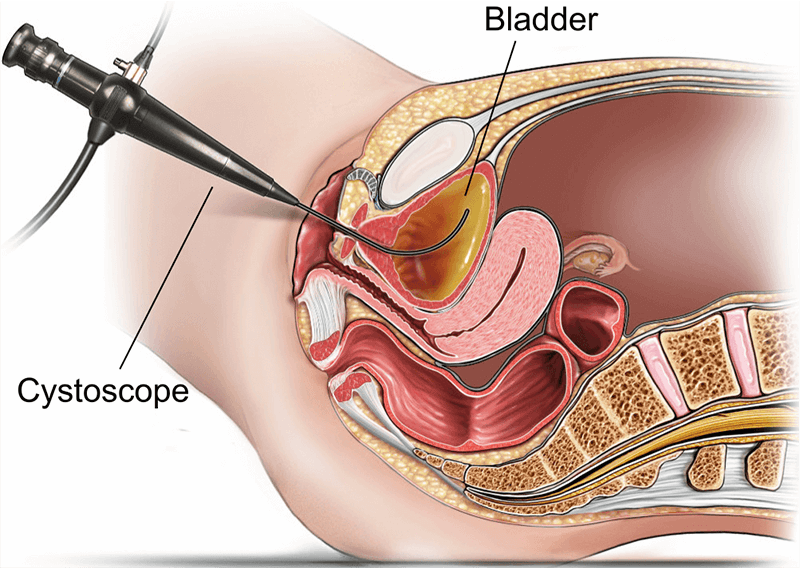
Endoscopic Bladder Stone Surgery, also known as Cystolitholapaxy, is a minimally invasive procedure used to remove bladder stones.
A thin endoscope is inserted through the urethra into the bladder. Specialized instruments or laser energy are then used to break the stone into smaller fragments, which are removed safely.
The procedure is highly effective and eliminates the need for large surgical incisions in most cases.
How is Endoscopic Bladder Stone Surgery Performed?
Step 1: Anesthesia
The procedure is performed under spinal or general anesthesia.
Step 2: Endoscopic Access
A cystoscope is inserted through the urethra into the bladder.
Step 3: Stone Identification
The stone is visualized directly using advanced endoscopic equipment.
Step 4: Stone Fragmentation
Laser or mechanical devices are used to break the stone into smaller pieces.
Step 5: Stone Removal
The stone fragments are removed completely from the bladder.
Step 6: Catheter Placement
A temporary catheter may be placed to aid healing and drainage.
Types of Kidney Transplant
Living Donor Kidney Transplant
A healthy kidney is donated by a living individual, often a family member or compatible donor.
Living Donor Kidney Transplant
A healthy kidney is donated by a living individual, often a family member or compatible donor.
Benefits of Endoscopic Bladder Stone Surgery
Key Advantages Include:
- Minimally invasive treatment
- No large surgical incisions
- Faster recovery
- Reduced pain and discomfort
- Short hospital stay
- High success rates
- Quick return to normal activities
- Effective stone clearance
Recovery After Surgery
Most patients recover quickly after treatment.
Recovery generally includes:
- Hospital stay of 1–2 days
- Temporary catheter if required
- Increased fluid intake
- Mild burning sensation during urination for a few days
- Follow-up evaluation
- Gradual return to normal activities
Patients usually experience immediate relief from symptoms after successful stone removal.
Preventing Future Bladder Stones
Prevention depends on treating the underlying cause and maintaining urinary health.
Recommendations may include:
- Adequate hydration
- Timely treatment of enlarged prostate
- Management of urinary retention
- Treatment of urinary infections
- Regular follow-up evaluations
- Lifestyle and dietary guidance
Our specialists provide individualized prevention strategies based on your condition.
Schedule Your Bladder Stone Consultation
If you are experiencing symptoms of bladder stones or have been diagnosed with a bladder stone, our specialists can help determine the most effective treatment option for you.
Frequently Asked Questions (FAQ'S)
Common causes include enlarged prostate, urinary retention, bladder outlet obstruction, recurrent urinary infections, neurogenic bladder, and foreign bodies inside the bladder.
It is a minimally invasive procedure in which a specialized endoscope is passed through the urethra to locate and break bladder stones into small fragments that can be removed safely
No. The surgery is performed under spinal or general anesthesia, ensuring patient comfort.
The procedure usually takes between 30 and 90 minutes depending on the size, number, and hardness of the stones.
Yes. Recurrence is possible if the underlying cause is not treated. Proper follow-up and preventive measures can reduce the risk.
The cost generally ranges from ₹40,000 to ₹1,20,000, depending on stone size, laser requirements, investigations, hospital stay, and individual treatment needs.
PATIENT REVIEW'S
Our patients choose us as the best hospital for treatment due to our quality care and experienced doctors.
Trustindex verifies that the original source of the review is Google. Best in both treatment and hospitality and very easy going atmosphere, definitely worth 5 stars .Posted on GoogleTrustindex verifies that the original source of the review is Google. Very very Thank you so much blood bank niramaya patna hangman nagar 🙏👍👌Posted on GoogleTrustindex verifies that the original source of the review is Google. Blood bank services so good & hospital staff so helpful person..Posted on GoogleTrustindex verifies that the original source of the review is Google. Very good doctor
GET IN TOUCH WITH US!
Contact Niramaya Hospital today to book your appointment or get immediate medical assistance from our expert team.

Welcome to Niramayah Hospital, where advanced medical technology and compassionate care meet. Our state-of-the-art institution has experienced staff, qualified doctors and a team of dedicated professionals.
Contact Info
Urology Care
Laparoscopic Urology
Orthopaedics
Copyright © 2026 Niramayah Hospital. Designed by 
- Terms & Conditions
- Privacy Policy
- FAQ